A group’s staff, leave and finance in a single web system
30+
companies in one system
We built a web-based HR and finance system for a group of companies: staff, leave, rosters and documents of every company in the group in one place. Employees request leave themselves, their manager is notified by e-mail and approves; where needed, the companies also invoice and manage stock in the same system.
- Companies
- Hungarian companies and one in Slovakia, in one shared system
- User groups
- Office users (HR, finance) and employees – employees log in separately and land on the leave calendar
- Modules
- HR (employee records, leave, rosters, attendance, documents), finance and invoicing, stock, analytics
- Platform
- Web application in the browser, cloud-hosted
- Integrations
- NAV Online Invoice, MNB exchange rates, e-mail notifications, accounting export
- 2024–2026
- Live, supported
Screenshots
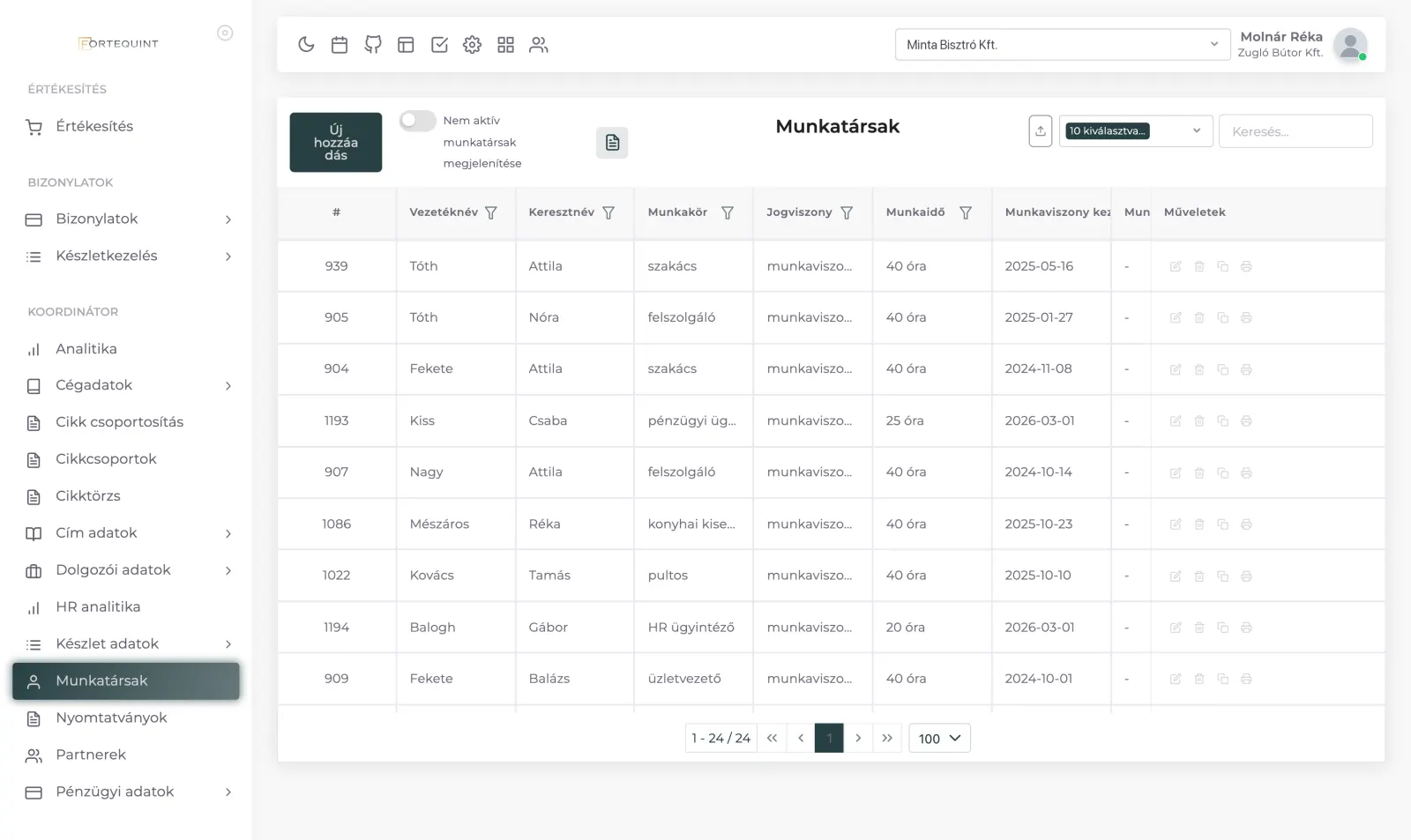
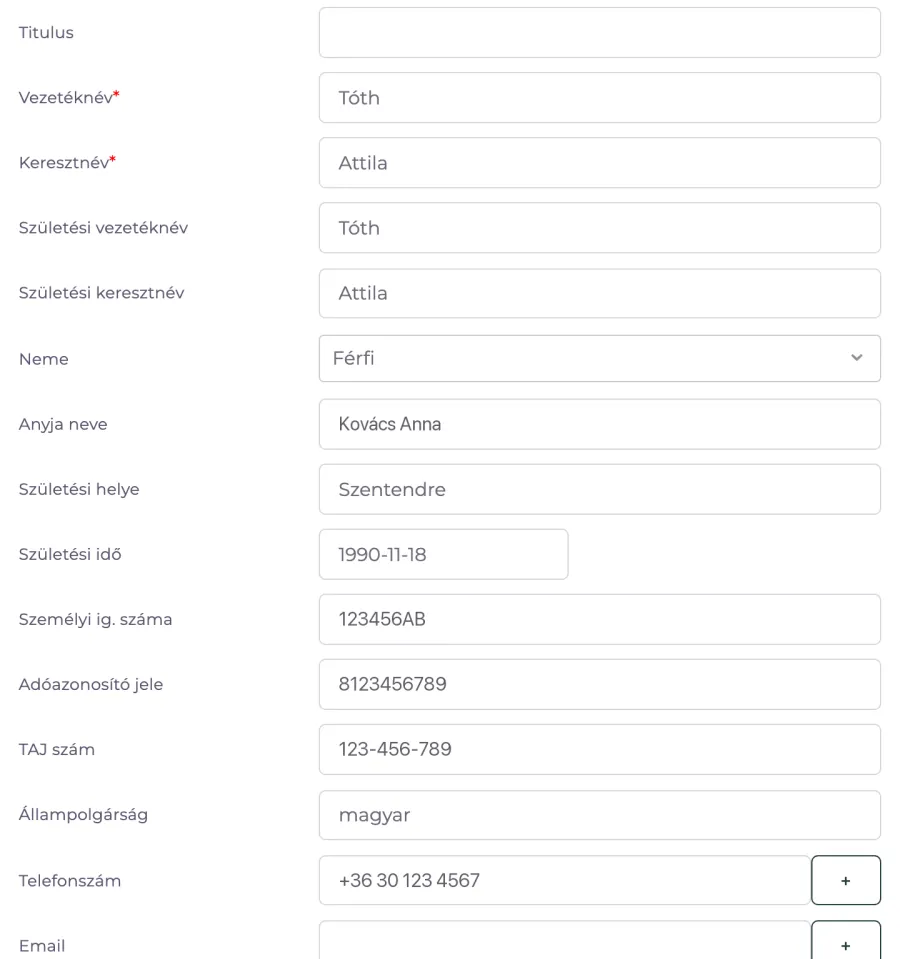
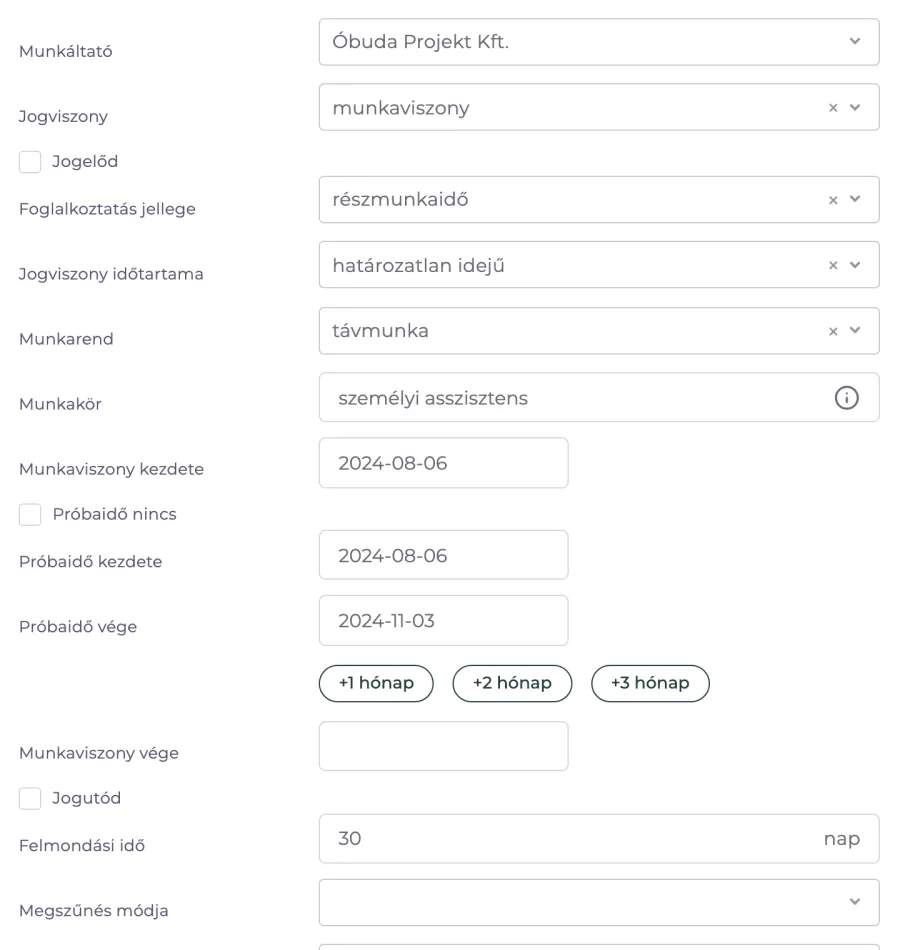
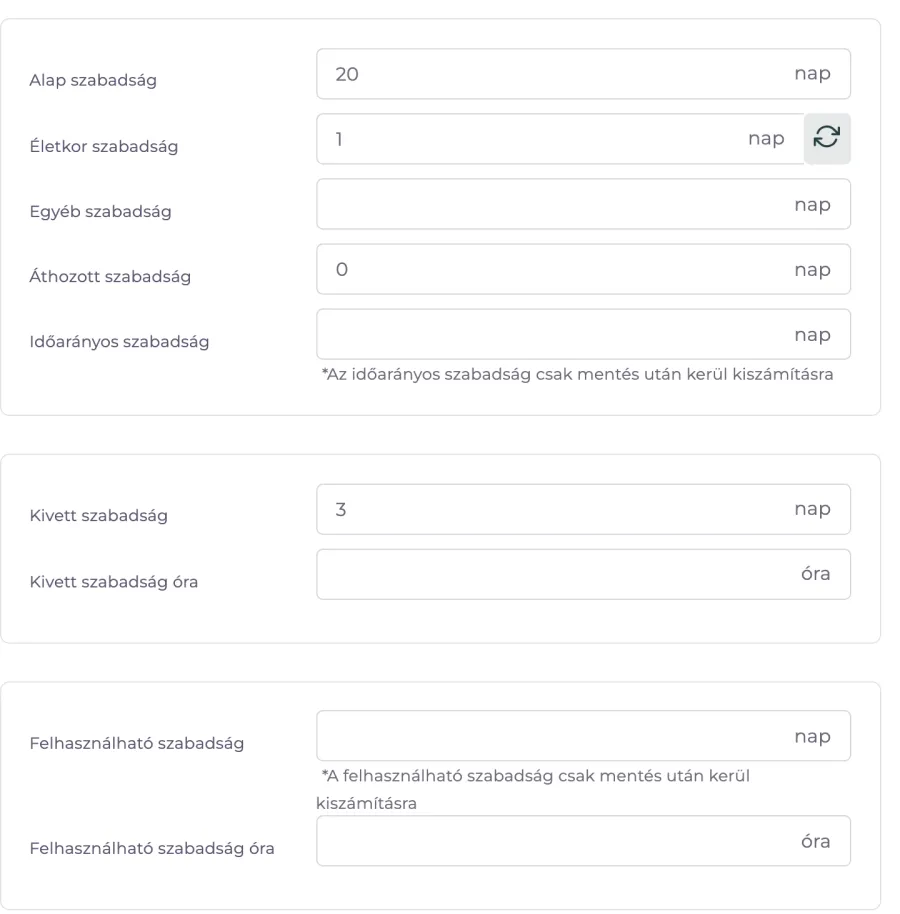
Screenshots use demo data – no real customer data is shown.
Contents
Modules
HR managementControlling & decision support (MIS)Purchasing, logistics & inventoryFinance & accountingWorkflow managementElectronic document management
Technology
AngularTypeScriptPrimeNGPHPCodeIgniter 4MySQLNAV Online Számla APIMNB árfolyam-szolgáltatásPhpWord (DOCX-sablonok)TCPDF / dompdfJWT
About the client
The KDO group is a diversified group of companies headquartered in Budapest: many companies spanning hospitality and retail, cleaning, property and investment, and the energy sector – in Hungary and Slovakia. With that many activities in one group, shared staff and inter-company accounting are no side issue – so they wanted a system that fits their own processes.
Starting point
The group’s companies shared staff under many kinds of contracts. The goal: “don’t bend the processes to an ERP – fit the ERP to the processes”.
What we built
- 01Detailed employee record on 13 tabs: personal data and addresses, employment, pay, leave allowance, bank accounts and SZÉP card, qualifications, medical fitness, assets issued, notes, history, documents, attendance sheets, login
- 02One employee at several companies under several contracts: per contract the company, job, FEOR code, work schedule, hours, pay, probation and leave approver
- 03Employee portal: staff log in to request leave, see all their documents and receive their monthly payslip – while HR manages everyone in one place, whichever company they work for
- 04Leave requests from the employee’s own login, on a calendar; the approver gets an e-mail about the request, the employee about approval or rejection; the allowance is pro-rated, and age-based extra days are calculated from the date of birth; separate sick-leave allowance
- 05Leave calendar filtered by company and site, roster planner with shifts, working-day calendar
- 06Employee documents: Word templates filled with the employee’s and company’s data (e.g. casual-work contracts), attendance sheets as PDF from the roster, payslips split per employee; employees get an e-mail when a document is released to them
- 07HR analytics to Excel: roster per employee and day, staff list with hours, pay and changes (also for one person across all contracts), monthly hours with leave and sick leave
- 08Finance per company: quotes, pro-forma, advance and outgoing invoices connected to NAV, cancellation and correction, incoming invoices split by cost centre, a draft incoming invoice at the receiving company for intra-group invoices, cash desk in HUF and EUR, receivables and e-mailed payment reminders, accounting export
- 09Stock where needed: item master, warehouses, goods receipt, other receipts and issues, stocktaking, stock card
Challenges
- The same employee at several companies, in different jobs and contracts – leave, approver and attendance must be tracked per contract, yet on one record
- Many Hungarian employment types and data (casual work, pensioners, reduced working capacity, allowances, dependants) – this needed more than 15 HR master lists
- Highly sensitive personal and pay data of every company in the group’ staff in one system – employees request leave with their own login, on a separate entry point from the office
Changes along the way
Something always changes on a large project. This is how we handled it.
A finance system became an HR system
In the first months (Nov 2024 – Mar 2025) we built invoicing, the NAV connection, cost centres and receivables. In spring 2025 HR moved to the front: employee records, leave calendar, attendance sheets, then casual-work contracts and HR analytics – today this is the most used part of the system.
Timeline
Nov 2024 – Jan 2025
Start: companies, invoice layout, per-company printing, cost centres, incoming invoices with status
Feb–Mar 2025
Testing and go-live: analytics, NAV submission (outgoing, advance, corrective), receivables, payment reminders, cash desk in HUF and EUR
Apr–May 2025
HR module: employee records, leave types and calendar, employee login, attendance sheets
Jun–Oct 2025
Casual-work contracts, rosters and leave, e-mail notifications, HR analytics, probation, payments in analytics
Feb – Jul 2026
Releasing employee documents with e-mail notification, VAT breakdown by rate on the invoice